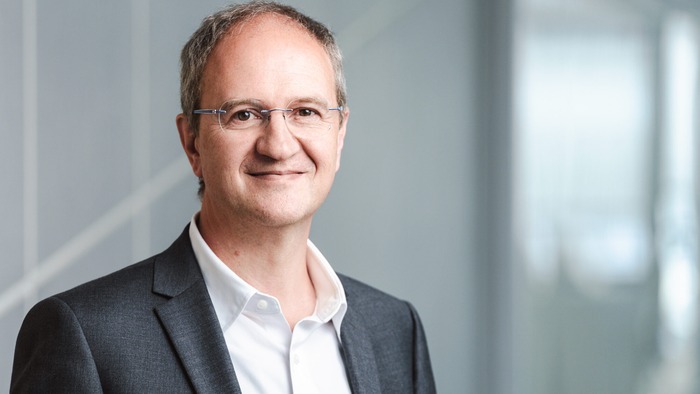
Nexans has appointed Stéphane Artaud as Chief Operating Officer and a member of its Executive Committee, handing a thirty year veteran of Saint-Gobain responsibility for the industrial performance and supply chain of a group that has reshaped itself into a pure play electrification business. The French cable maker, listed on Euronext Paris, announced the appointment on 14 October 2026, with Artaud taking up the role at the start of November.
Artaud will lead the transformation and performance of the group's industrial operations and supply chain worldwide, a brief that includes continuing to modernise production facilities and to optimise the global industrial footprint. Julien Hueber, Chief Executive Officer, said industrial excellence is a core driver of the group's growth strategy and that he looked forward to welcoming Artaud to the Executive Committee. Artaud succeeds Vijay Mahadevan, who moves to focus on the group's Grid and Connect activities in Europe, so the change redeploys the outgoing operations lead rather than removing him.
Artaud spent close to three decades at Saint-Gobain in senior leadership roles across Europe, the Americas and Asia. He was most recently Vice President of Sekurit OEM Europe, the automotive glazing business serving original equipment manufacturers, and before that led Saint-Gobain Abrasives' operations in South America and served as General Manager of Sekurit North America. He is a French national and a graduate of the École nationale supérieure de chimie de Rennes, and speaks French, English, Spanish and Portuguese. The shape of his career is industrial rather than commercial: a materials man by training who has run manufacturing businesses on three continents.
Nexans describes itself as a global pure play sustainable electrification company with more than one hundred and forty years of history. It is organised around three businesses, PWR Transmission, PWR Grid and PWR Connect, operates in thirty nine countries, employs 12,830 people and reported standard sales of 6.1 billion euros for its most recent full year. The group has spent recent years narrowing its portfolio towards cables and systems for power transmission and distribution, a repositioning that has coincided with heavy demand from grid operators and offshore wind developers. It targets net zero emissions by 2050 in line with the Science Based Targets initiative.
The appointment is best read against that repositioning. A company that has concentrated itself on high voltage transmission, grid infrastructure and connection products is one whose principal constraint is no longer finding demand but converting a long order book into delivered projects at acceptable cost, which makes industrial throughput and supply chain reliability the binding issue rather than a supporting one. Recruiting an operations leader from Saint-Gobain, a building materials group whose discipline lies in running capital intensive plants at scale, fits that diagnosis, although the company framed the hire in terms of industrial excellence generally rather than any specific bottleneck, and the connection is an inference. The simultaneous redeployment of the previous operations lead into the European grid and connection business suggests the group is thickening management inside the commercial businesses at the same time as it centralises industrial oversight. That is a structure that works only where the chief operating officer and the business leaders agree on where authority over the plants actually sits.