


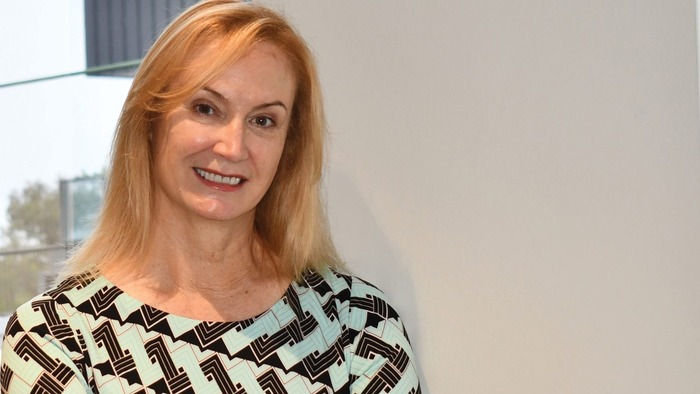
Australian Unity has appointed Anne McCormack as chief executive and group executive of its home health division, reported on 6 October. She joins from mecwacare, the Victorian aged and community care provider she has led as chief executive, and starts early next year.
The appointment is one of two senior changes disclosed together. Mark Potter, formerly chief information officer at Optus, becomes group executive for technology and starts earlier, in the closing weeks of this year.
McCormack takes over the home health business from Prue Bowden, who has resigned after about four years running the division. The handover is spread over several months, which for a care business is less a courtesy than a necessity: rosters, client relationships and regulatory accreditations do not transfer cleanly on a single day.
A sector in the middle of a rebuild
Home health is the part of the Australian care economy under the most pressure to change. Policy has moved decisively towards supporting people in their own homes rather than in residential facilities, which is both the stated preference of most older Australians and, in principle, the cheaper option. In practice it is operationally far harder. A residential facility concentrates staff, supervision and compliance in one building. A home care business has to deliver the same standard across thousands of separate addresses, with travel time between each one and with a workforce that is scarce, mobile and expensive to replace.
That is the problem McCormack has been working on from the provider side. mecwacare operates across residential, home and community care in Victoria, so she arrives having had to reconcile the economics of both models inside one organisation rather than arguing for one against the other.
Why a care operator rather than a financial services executive
Australian Unity is a mutual with businesses spanning health insurance, banking, wealth and care. It could reasonably have filled the role from inside financial services, treating home health as a portfolio asset to be managed for return. Choosing a serving provider chief executive instead points the other way, towards treating the division as an operating business whose margin is made or lost in rostering, in client acquisition and in clinical governance.
That choice has a clear logic. Reform in the sector has shifted funding towards individualised packages, which means revenue now follows the client rather than the provider, and client choice is won on service quality and reliability. Those are operational outcomes. An executive whose instincts were formed in capital allocation would be working a step removed from where the result is actually produced.
The technology half of the announcement
Pairing the care appointment with a telecommunications chief information officer is worth noting. The binding constraint on home care at scale is scheduling and field workforce management, which is a logistics and data problem before it is a clinical one. A telco technology executive has spent a career on exactly that class of problem: large distributed field workforces, high transaction volumes and systems that cannot be taken offline.
Taken together, the two appointments suggest a group that has diagnosed its home health challenge as operational and technical rather than strategic. The strategy, that care moves into the home, is settled. The question is whether it can be delivered at a margin, and these are the two hires you make if that is the question you are trying to answer.