

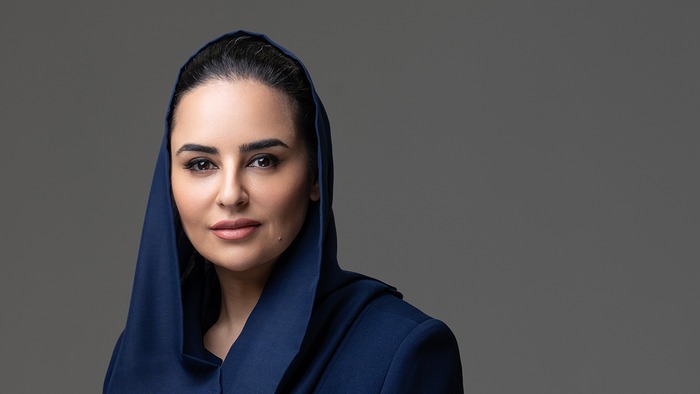
UN Secretary-General António Guterres has appointed Deemah AlYahya, Secretary-General of the Digital Cooperation Organization, as a member of the High-Level Panel on Freedom of Transit for Landlocked Developing Countries, making her the sole representative from Saudi Arabia and the Arab region on the influential panel. The appointment, announced on 24 September 2026, brings a digital economy and international cooperation perspective to a mechanism tasked with identifying practical solutions to help 32 landlocked developing countries overcome barriers to global trade and access to markets.
The High-Level Panel on Freedom of Transit was established pursuant to the Awaza Programme of Action for Landlocked Developing Countries for the decade running to 2034, adopted by the UN General Assembly. The panel's mandate requires it to examine the application of existing international laws and agreements on freedom of transit, identify implementation gaps and constraints, and provide recommendations to strengthen transit systems for landlocked developing countries in accordance with international law. The final recommendations will be submitted to member states during the eighty-second session of the UN General Assembly. The panel comprises representatives from member states, international organizations, the private sector, academia and independent experts, functioning as an independent and impartial technical body.
AlYahya brings nearly two decades of experience building tech communities and driving digital innovation across the United States and the Middle East. She holds a bachelor's degree in computer science and information systems from King Saud University and has completed executive programs at INSEAD and Harvard Business School. Her career includes pioneering roles as a software engineer at Samba financial institution, the Saudi stock exchange (Tadawul), and Microsoft, where she became the first Saudi woman to hold a leadership position. As CEO of the National Digital Transformation Unit from 2016 to 2017, she led Saudi Arabia's digital transformation strategy and launched Saudi Codes, an initiative that trained more than 1.2 million people. AlYahya also founded Women Spark, Saudi Arabia's first women's angel investment network, which has trained over 26,000 women in technology and entrepreneurship. She was elected as the founding Secretary-General of the Digital Cooperation Organization in April 2021 and was reappointed for a second four-year term in May 2025.
The Digital Cooperation Organization, established in 2020 and headquartered in Riyadh, is an intergovernmental organization founded by Bahrain, Jordan, Kuwait, Pakistan, and Saudi Arabia. It operates as the world's first standalone multilateral body focused on accelerating digital transformation and advancing an inclusive, sustainable digital economy while empowering women and youth. The organization works to foster international cooperation among key stakeholders to ensure that every country, business and person has a fair opportunity to prosper in the global digital economy.
The appointment represents a noteworthy shift in how multilateral bodies approach the challenges facing landlocked developing countries. Historically, such panels have focused primarily on physical infrastructure and border logistics. By including AlYahya's expertise in digital economy and international cooperation, the panel appears to be acknowledging that modern solutions to transit barriers must integrate digital customs instruments and trade facilitation technologies alongside traditional transport infrastructure. The 32 landlocked developing countries face disproportionately high transport and trade costs and goods take approximately four times longer to clear ports and reach their economies, according to UN estimates. AlYahya's participation suggests that the panel intends to examine how digital tools and cross-border data flows can help overcome these structural disadvantages while building resilience in global supply chains.