


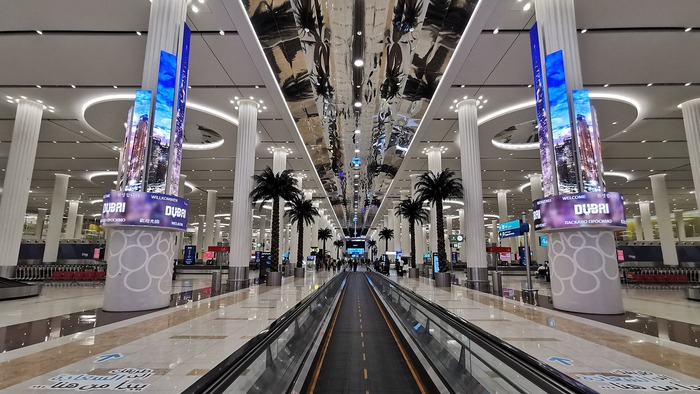
The United Arab Emirates has suspended all flights operated by Iranian airlines to and from the country, effective 24 September 2026 and continuing until further notice. The General Civil Aviation Authority announced the move through the state news agency WAM, and tied it directly to external pressure rather than to any safety or bilateral dispute.
The authority said the suspension was taken "in light of the US ban imposed on Iranian airlines from using airports in various countries around the world." That is an unusually direct acknowledgement of cause, and it places the decision squarely in the category of secondary sanctions compliance rather than sovereign aviation policy.
What triggered it
The underlying action came from the US Treasury on 8 September 2026. Under the designation Operation Economic Outcast, the Office of Foreign Assets Control sanctioned 36 targets including 27 Iranian carriers, among them Iran Air Tour, Iran Aseman Airlines and Qeshm Air, under Executive Orders 13224 and 13902.
Treasury Secretary Scott Bessent set out the reach of the measure in terms aimed at third countries rather than at Iran. Anyone doing business with Iran's remaining airlines, he said, is "at risk of being cut off from the global financial system." He put the operational detail more plainly still: "You cannot provide them with fuel, you cannot provide them with landing services, you cannot sell them tickets, or you will be knocked out of the dollar system."
Majid Akhavan, spokesman for Iran's Civil Aviation Organization, said "diplomatic and aviation talks are under way" to remove the restrictions and restore flights.
The mechanism is the story
Six countries are now restricting Iranian carriers: the United Arab Emirates, Oman, Iraq, Azerbaijan, Georgia and Turkmenistan. What that list has in common is not a shared position on Iran. It is exposure to the dollar clearing system, and in the case of the Gulf states, a financial sector whose entire business model depends on uninterrupted correspondent banking relationships in New York.
Read that way, the suspension is not really an aviation decision and the civil aviation authority is not really the decision maker. The binding constraint is that fuel, ground handling and ticketing are all paid for, and every one of those payments touches a bank. A carrier that cannot be paid cannot be served, whatever the landing rights say. That is why the measure works at one remove and why it propagates through countries that have no quarrel with Tehran.
For the UAE specifically the cost is concentrated and visible. Dubai has been the principal air link between Iran and the outside world for two decades, carrying business travel, medical travel and family traffic that has no obvious substitute. Absorbing that loss rather than contesting the designation tells you how the calculation was made: the aviation revenue at stake is real, and it is still small next to the consequences of a correspondent banking problem.