

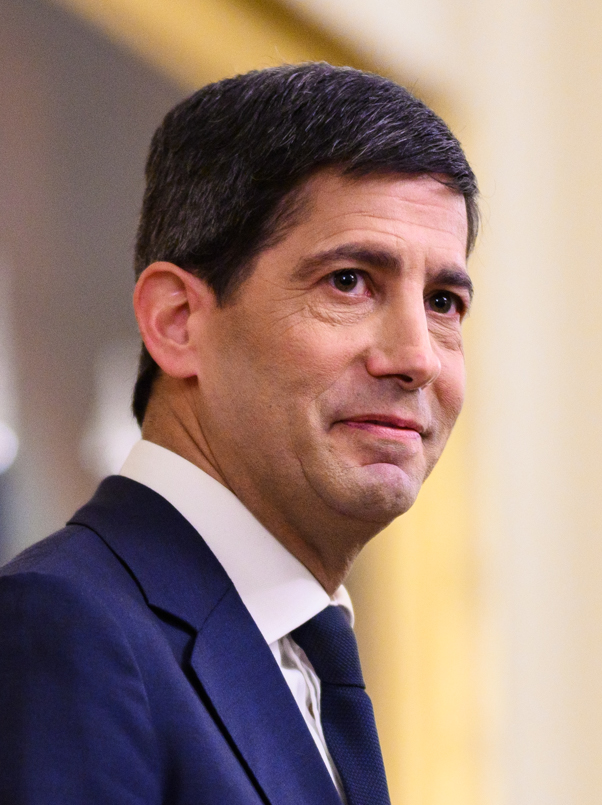
Kevin Warsh, a former Federal Reserve governor and longtime Trump ally, was sworn in as the 17th chair of the Federal Reserve on May 22, 2026, after the Senate confirmed him by a razor-thin 54-45 vote marking the most divisive confirmation in Fed history. Warsh, 56, assumed control of the world's most influential central bank at a moment of mounting economic uncertainty, with inflation running above the Federal Reserve's 2 percent target, volatile energy prices, and heightened geopolitical tensions creating a complex backdrop for policy decisions. The appointment comes amid growing political pressure on central bank independence, with Warsh positioned as a more compliant Fed leader than his predecessor Jerome Powell, whom President Donald Trump had publicly criticized for not cutting interest rates aggressively enough.
The appointment culminated a contentious selection process that began when Trump announced Warsh as his nominee on January 30, 2026, with formal nomination on March 4. The Senate Banking Committee confirmed Warsh to the Board of Governors on May 12 and as chairman on May 13, with all Republicans supporting him and only Senator John Fetterman of Pennsylvania breaking ranks among Democrats. The narrow margin reflected deep partisan divisions over Warsh's suitability for the role, compounded by concerns that his appointment would compromise Fed independence. No search firm was involved in the selection. Political complications arose when the Justice Department, led by DC US Attorney Jeanine Pirro, launched a criminal investigation into the central bank under Powell's leadership, a probe that eventually was dropped though Pirro reserved the right to reopen it pending inspector general findings.
Warsh brings substantial experience in both finance and government service. He graduated from Stanford University in 1992 with a degree in public policy and earned a law degree from Harvard Law School in 1995. He began his career at Morgan Stanley in 1996, where he specialized in mergers and acquisitions, eventually becoming vice president and executive director of investment banking before leaving in 2002. From 2002 to 2006, Warsh served as special assistant to President George W. Bush for economic policy, providing White House counsel during a formative period. Appointed to the Federal Reserve Board of Governors in 2006 at age 35, he became the youngest person ever appointed to the position and sat alongside Chair Ben Bernanke through the 2008 financial crisis, where he played a central role in coordinating emergency responses with Wall Street. He departed the Fed in 2011 after expressing skepticism about the long-term risks of quantitative easing and bond-buying policies. Between his Fed tenure and his current appointment, Warsh served as a visiting fellow in economics at Stanford University's Hoover Institution and as a lecturer at Stanford Graduate School of Business, while also functioning as a partner at Duquesne Family Office, a major investment vehicle.
The Federal Reserve System stands as the central bank of the United States, wielding authority over monetary policy through its 12-member Federal Open Market Committee comprising seven governors and five regional Fed presidents. The chair presides over this committee but cannot unilaterally set policy, requiring consensus building to advance priorities. The Fed's balance sheet exceeds $6.7 trillion, and its decisions on interest rates directly influence borrowing costs for mortgages, credit cards, and business loans affecting every American household. The institution was established under the Federal Reserve Act of 1913 and operates with a stated mandate to pursue price stability and maximum employment, though it operates with relative autonomy from executive branch pressures.
Warsh's leadership arrival signals potential structural changes to how the central bank operates, though significant constraints on his authority temper transformation expectations. He has publicly advocated for reducing the Fed's balance sheet, coordinating more closely with the Treasury Department on monetary operations, cutting the number of annual policy meetings from eight to potentially four, hosting fewer press conferences, shrinking the central bank's Washington workforce, and eschewing forward guidance on interest rate paths. His first FOMC meeting as chair on June 16-17 demonstrated these inclinations, with the committee issuing a notably shortened policy statement and Warsh notably withholding his own interest rate projections from the dot plot while 11 of 12 participants provided theirs. These moves suggest Warsh intends to operate with greater opacity than Powell, whom markets had come to expect regular detailed communication. However, his ability to implement sweeping changes remains circumscribed by the need for committee consensus. While Trump publicly stated his expectation that Warsh will pursue more aggressive rate cuts, the Fed chair cannot unilaterally lower borrowing costs. The broad committee structure and demonstrated resistance to dovish shifts, particularly amid persistent inflation concerns, suggests potential friction between Warsh's apparent preferences and the committee's actual voting patterns, raising the distinct possibility that Warsh becomes the first modern Fed chair to be outvoted on major policy decisions.