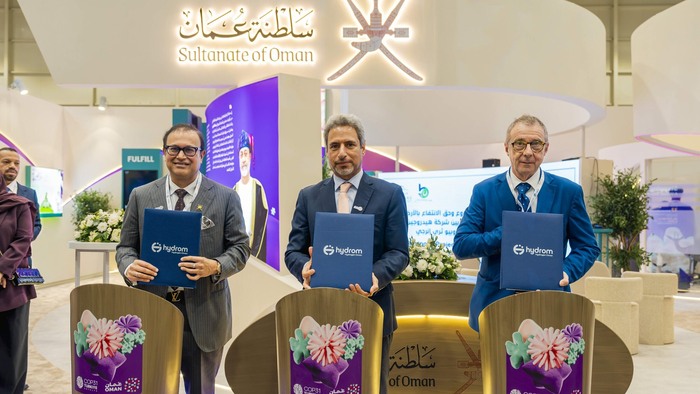
Oman has awarded two green hydrogen development blocks at Duqm and opened a fourth auction round aimed at green powered data centres, announcing both at the COP31 climate conference. The awards are made under the country's structured land allocation system for hydrogen, administered by Hydrom.
The first agreement goes to a consortium of Petrogas E&P of Oman and Bio3Energy of Italy. It targets 625,000 tonnes a year of green ammonium nitrate by 2032, drawing on roughly 50,000 tonnes a year of hydrogen produced from about 1.16 gigawatts of renewable generation, on a site of about 100 square kilometres with a further 100 square kilometres reserved.
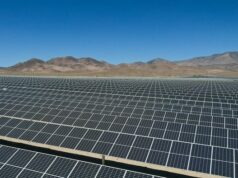
The second goes to PLN Indonesia Power Renewables with Alawi Enterprises of Oman and HBA Offshore International of Singapore. It targets 400,000 tonnes a year of green ammonia for export by 2032, supported by about 1.45 gigawatts of solar generation and one gigawatt of electrolysis capacity across about 100 square kilometres. Together the two projects are planned to produce roughly 121,000 tonnes of green hydrogen a year by 2032.
The choice of products is the commercially interesting part. Neither consortium is selling hydrogen as hydrogen. Ammonium nitrate is an industrial chemical with an existing buyer base, chiefly in mining explosives and fertiliser, and green ammonia is the only practical way to move hydrogen energy long distances by sea. Both approaches sidestep the problem that has stalled hydrogen projects elsewhere, which is that the molecule itself has no large offtake market and is expensive to transport.
Oman's approach to the sector has been more disciplined than most. Rather than signing memoranda of understanding, it allocates defined blocks through competitive rounds with development obligations attached, which forces bidders to commit to capacity and timing rather than to intentions. That structure has produced a visible project pipeline at Duqm and in the south of the country while comparable programmes elsewhere have produced announcements.
The fourth round reframes the question again. By tying a hydrogen auction to green powered data centres, the country is pointing at electricity demand that is growing faster than almost any other category and that is willing to pay for firm low carbon supply. For a producer, a data centre campus is a creditworthy local offtaker, which is precisely what a hydrogen project struggles to find.
No investment figures were disclosed for either award.