


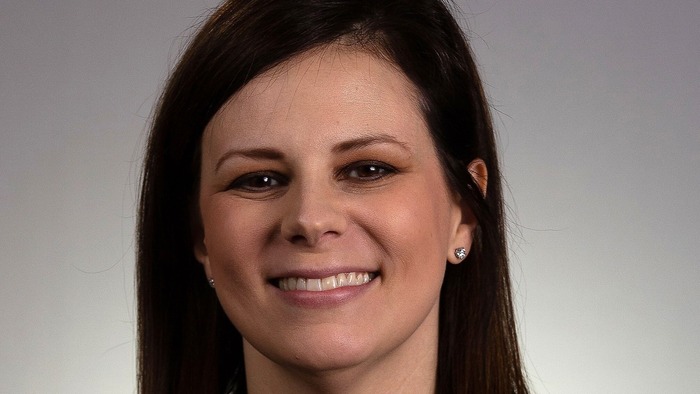
Standex International has appointed Samantha Stoddard as Vice President, Chief Financial Officer and Treasurer, recruiting the finance chief of building products group JELD-WEN Holding. She takes up the role at the start of December.
Stoddard succeeds Ademir Sarcevic in the finance seat at the New Hampshire diversified industrial manufacturer. She leaves JELD-WEN in the middle of next month, where Jeffrey Embt, the group's vice president and chief accounting officer, steps in as interim chief financial officer.
She has held the JELD-WEN finance role since the middle of 2024, having joined that company four years earlier as vice president of finance for North America and progressing through the North American finance leadership and global planning function. Before that she was chief financial officer of the personal protection equipment business unit at Honeywell. Earlier roles spanned timber, technology services and financial services. She holds a master's degree in accounting from the University of Texas at Dallas and a bachelor's degree in economics and political science from Wake Forest University.
A recruit from a harder market
The provenance of this hire is worth dwelling on. Stoddard is arriving from building products, a sector that has spent the past two years absorbing a severe and sustained demand contraction as higher financing costs suppressed both new residential construction and renovation activity. Running finance through that is a particular kind of training: it is the work of protecting margin while volume falls, managing covenants that were set in easier conditions, and deciding which capacity to idle rather than which to add.
Standex is a different animal. It is a collection of niche industrial businesses spanning electronics, engraving, scientific refrigeration and engineering technologies, assembled and reshaped over years of portfolio management. Its strategy rests on buying specialised businesses with defensible positions, improving their margins and selling what no longer fits. That is a model in which the finance function is not a reporting function but an allocation one, and the chief financial officer is effectively the second voice on every deal.
The pairing makes sense on that reading. A manufacturer whose growth depends on acquisitions needs a finance chief who has done the unglamorous half of portfolio work as well as the acquisitive half, and who will not mistake a cyclical trough for a structural decline when valuing a target. Someone who has just spent two years inside a downturn is likely to price one correctly.
The timing is also conventional in a way that favours a clean handover. A start at the beginning of December puts Stoddard in place before the close of the calendar year and well ahead of the next full-year reporting cycle, which gives her a complete quarter to form her own view of the portfolio before she has to defend it publicly.