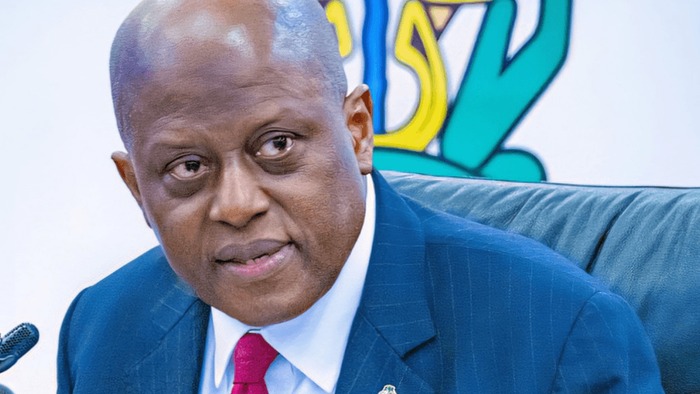
Africa Finance Corporation announced on 14 October 2026 that Olayemi Cardoso, governor of the Central Bank of Nigeria, has been appointed chairman of its board of directors. The announcement was made in Bangkok by Samaila Zubairu, the corporation's president and chief executive, on the sidelines of the annual meetings of the International Monetary Fund and the World Bank Group, where AFC was holding an investors' forum. The corporation's own leadership page now lists Cardoso as Chair, Board of Directors. Ireti Samuel-Ogbu, the immediate past chair, remains on the board as a member, and Zubairu publicly thanked her for her service in the handover.
AFC is a multilateral finance institution established almost two decades ago through an agreement among African sovereign states to mobilise private capital for infrastructure and industrialisation. It is headquartered in Lagos under a host country agreement with the Nigerian federal government, and it provides debt and equity finance, project development support and advisory services, concentrated in power, natural resources, heavy industry, transport and logistics, and telecommunications. Reporting on the appointment put cumulative investment at more than 19 billion dollars across 36 African countries since inception. Japan Credit Rating Agency recorded total assets of about 14.41 billion dollars at the most recent year end it assessed, and S&P Global Ratings has assigned the corporation an A long term and A-1 short term issuer credit rating with a positive outlook.
The detail that gives the appointment its weight is the combination of roles. Cardoso continues as governor of the Central Bank of Nigeria while chairing a multilateral development financier whose ownership is heavily Nigerian. In assigning its ratings, S&P identified shareholder concentration as a risk, putting the Central Bank of Nigeria's own stake at about 39 percent and the combined holding of the central bank and Nigerian financial institutions at roughly 75 percent of a register of around 60 shareholders. Japan Credit Rating Agency went further, describing Nigerian ownership as close to 80 percent, noting that only 15 African countries are shareholders despite 44 being members, and recording callable capital contributions from six countries. On that structure, the chairman of the board is also the governor of the institution that is the single largest shareholder, which concentrates oversight and ownership in one person and is the governance question the appointment raises.
There is context on the other side of that question. AFC's board already seats serving central bankers, including the governor of the Central Bank of Egypt, alongside chief executives of commercial banks that are themselves shareholders, so a central bank figure in the chair is consistent with how the board has been composed. Reporting on the appointment also noted that Cardoso is the sixth Nigerian to chair the board, a line of succession that began with Chukwuma Soludo.
Cardoso has led the Central Bank of Nigeria since September. The year was 2023. Before that he spent twelve years as chairman of Citibank Nigeria and served as commissioner for economic planning and budget in Lagos State. He holds a degree from Aston University in the United Kingdom and a master's in public administration from Harvard Kennedy School, where he has served on the alumni board. Speaking at the Bangkok forum, he said Nigerian inflation had fallen from the mid thirties in percentage terms to about 15 percent, that his medium term target was single digits, that the central bank would not become complacent, and that external reserves had reached their highest level in eighteen years.
The appointment reads as continuity of strategy rather than redirection. Zubairu said the corporation was "delighted to welcome Mr Cardoso as our Board Chairman", tying the choice to AFC's argument that Africa's stability rests on its productive capacity. Cardoso framed his own test in the same terms: "A more productive Africa is a more stable Africa." He added that "Our measure of success must be the productive capacity we create, the industries we enable and the jobs we support." For a financier that is trying to broaden its sovereign shareholder base and raise equity, a chairman who is both a serving monetary authority and a former international banker is a signal aimed at capital markets and at member states at once. Whether that same profile complicates the independence of the chair, or strengthens the corporation's access to the policymakers it needs, is the thing to watch.