


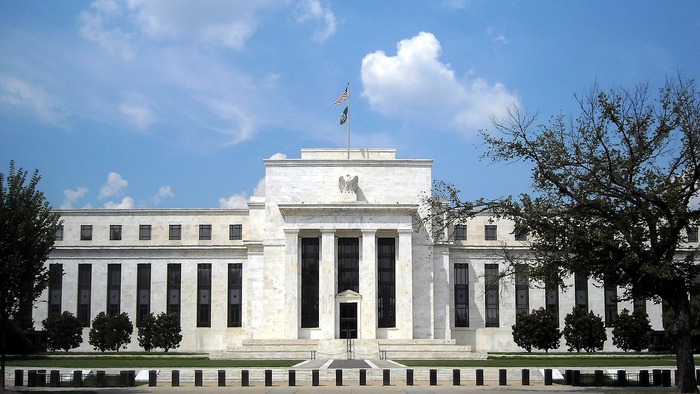
Five of the six Gulf Cooperation Council central banks raised policy rates within a day of the United States Federal Reserve lifting its benchmark on 16 September 2026, the first increase since 2023.
The Federal Open Market Committee raised the federal funds target range by a quarter point to between 3.75 and 4.00 per cent. The vote was unanimous at twelve to nil. Under the accompanying implementation note, effective 17 September, interest on reserve balances moved to 3.90 per cent, the standing overnight repo rate to 4.00 per cent and the primary credit rate to 4.00 per cent.
The committee said economic activity was expanding at a solid pace and that uncertainty remained elevated owing in part to geopolitical developments. It said inflation remained elevated and that the action would support a timelier return to the two per cent goal, closing with the declarative line that the committee will deliver price stability.
The Gulf response
The Saudi Central Bank raised its repurchase agreement rate by 25 basis points to 4.50 per cent and its reverse repo rate to 4.00 per cent, saying the decision was in line with its mandate of preserving monetary stability. The Central Bank of the UAE lifted its overnight deposit facility base rate by 25 basis points to 3.90 per cent. The Central Bank of Bahrain moved its overnight deposit rate to 4.50 per cent and the Central Bank of Oman its repo rate to the same level. Qatar Central Bank raised its deposit, lending and repo rates by a quarter point each.
The Central Bank of Kuwait held its discount rate at 3.50 per cent, consistent with the dinar being pegged to an undisclosed basket rather than to the dollar alone.
An imported cycle
This is a regime break that Gulf boards inherit without a vote. Because five of the six currencies are pegged to the dollar, regional corporate funding costs are now being set by a Federal Reserve that has stopped cutting and started tightening. Balance sheets built through 2024 and 2025 on the assumption of an easing cycle are working from a void assumption. Refinancing schedules, project finance pricing on Vision 2030 and comparable programmes, and floating rate corporate debt all reprice upward from 17 September.
The awkwardness is that the tightening is imported while the local cycle may not call for it. Higher oil prices lift Gulf sovereign revenue and feed United States inflation at the same time, so the peg transmits a squeeze at precisely the moment regional terms of trade improve. The committee's unusual reference to geopolitical developments ties the decision to the energy shock running through the same month.
Three things are worth watching. Kuwait's decision to sit this one out makes the divergence in funding costs against Saudi Arabia and the UAE a live question for regional treasurers if the Federal Reserve moves again. Gulf bank net interest margins should widen at the next set of quarterly results, with deposit competition following on a lag. And the regional listing and debt issuance pipeline may be pulled forward into the fourth quarter rather than held back, since issuers rarely wait out a rising risk free rate. The next Federal Open Market Committee meetings fall on 27 and 28 October and on 8 and 9 December.